
You have no items in your shopping cart.
Host Species & Reagent Selection
Rat Monoclonal Antibodies: A Great Alternative to Mouse
High-affinity rat mAbs for low-immunogenicity targets, mouse tissue staining without background, and multiplexing.
High-quality antibodies are vital for experimental success. While mouse monoclonal antibodies (mAbs) and rabbit polyclonals are widely used, rat monoclonal antibodies offer unique immunological advantages that make them an ideal primary choice for many research applications.
Rat mAbs excel at recognizing weakly immunogenic compounds, small molecules, and low molecular weight targets that fail to elicit strong immune responses in mice. Furthermore, when analyzing mouse tissue samples, rat primary antibodies eliminate the severe non-specific background caused by anti-mouse secondary antibody cross-reactivity with endogenous mouse immunoglobulins.
High Affinity for Challenging Biomarkers
Rat monoclonal antibodies can be used independently or in multi-labeling panels alongside rabbit monoclonals or polyclonals, offering greater flexibility across IHC, IF, Flow Cytometry, and Sandwich ELISA assays.
1. Advantages Over Mouse and Rabbit Hosts
Rats possess a distinct immune repertoire that recognizes novel epitopes under-represented in mice. Key host advantages include:
- Closer Genetic Proximity & Fc Similarity: Rat immunoglobulins present Fc structures closely resembling human Fc domains, generating robust IgA, IgD, IgE, IgG, and IgM isotypes.
- Elimination of Mouse-on-Mouse Background: Staining mouse tissue with mouse primary antibodies requires complex blocking steps to prevent anti-mouse secondary antibodies from binding endogenous tissue IgGs. Using rat primary antibodies avoids this cross-reactivity completely.
- Novel Epitope Recognition: Due to subtle evolutionary differences between rodent species, rats frequently generate high-affinity antibodies against conserved mouse proteins that mouse immune systems recognize as "self."
2. Validated Rat Monoclonal Staining Gallery
Examples of specific, low-background IHC and IF staining using Biorbyt rat monoclonal primary antibodies:
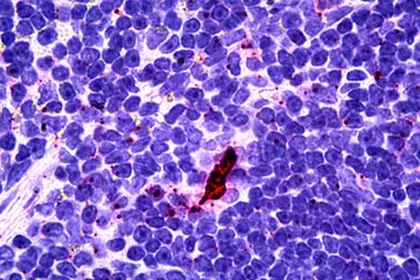
Immunohistochemistry of human lyphoid-dendritic cells stained using EBI3 Monoclonal Antibody.

Immunohistochemistry of human placenta tissue stained using ITGB4 Monoclonal Antibody..
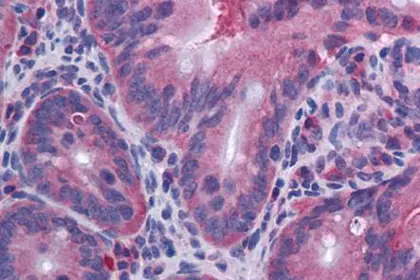
Immunohistochemistry of mouse small intestine tissue stained using IL-10 Monoclonal Antibody..

Immunofluorescence (IF/ICC) analysis of heat-shocked HeLa cells using anti-TCP1-alpha rat mAb (orb151162).

Immunohistochemistry of human spleen tissue stained using SELPLG Monoclonal Antibody.
3. Ten Reasons to Add Rat mAbs to Your Portfolio
Closer Similarity to Human Fc Structure
Rat immunoglobulin Fc regions share structural homology with human Fc domains, supporting functional effector assays and receptor interaction studies.
Optimal for Mouse Antigen Detection
Overcomes immunological tolerance to conserved mouse proteins, generating high-titer antibodies against mouse targets.
Detects Weak Immunogens and Low MW Targets
Superior response against haptens, peptides, and small molecules with low molecular weight.
High Antigen Binding Affinity
Strong monovalent binding kinetics ensure stable antibody-antigen complex formation under stringent wash conditions.
Exceptional Sensitivity & Target Specificity
Low background noise and precise single-epitope target recognition across quantitative assays.
Eliminates Background in Mouse Tissue Staining
Avoids anti-mouse secondary antibody cross-reactivity with endogenous mouse tissue immunoglobulins.
Effective Against Small Epitopes
Precise binding to constrained structural motifs and short linear peptide sequences.
Expanded Epitope Coverage
Accesses alternative epitope regions on target proteins that are immunologically silent in mouse host models.
Ideal for Multi-Labeling Multiplex Panels
Combines seamlessly with rabbit primary antibodies for simultaneous dual/triple staining without species conflicts.
Reliable and Reproducible Performance
Hybridoma and recombinant production formats ensure long-term batch-to-batch consistency for publication confidence.
Looking for High-Quality Rat Monoclonal Antibodies?
Biorbyt offers a growing catalog of target-specific rat monoclonal antibodies fully validated for IHC, IF, WB, and Flow Cytometry.
Browse Rat Monoclonals