Cart summary

You have no items in your shopping cart.

Acetylcysteine

SKU: orb1310210

Description

Acetylcysteine (NAC) is a mucolytic agent and reactive oxygen species (ROS) inhibitor used in research. It is applied in studies of apoptosis, respiratory diseases, and antiviral mechanisms, with utility in both in vitro and in vivo experimental models.

Research Area

Cell Biology, Immunology & Inflammation, Infectious Disease & Virology, Metabolism Research, Signal Transduction

Images & Validation

Key Properties

CAS Number616-91-1
MW163.19
Purity>99.99% (May vary between batches)
FormulaC5H9NO3S
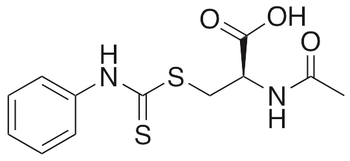
SMILES[C@@H](NC(C)=O)(C(O)=O)CS
TargetInfluenza Virus,TNF,ROS,Reactive Oxygen Species,Ferroptosis,Apoptosis,Endogenous Metabolite
Solubility10% DMSO+40% PEG300+5% Tween-80+45% Saline:2.5 mg/mL (15.32 mM);DMSO:60 mg/mL (367.67 mM);H2O:100 mg/mL (612.78 mM);Ethanol:31 mg/mL (189.96 mM)

Bioactivity

Target IC50
T24 cells:33.33 mM|PC9 cells:15.53 mM
In Vivo
METHODS: To investigate the effects on apoptotic liver injury in mice, Acetylcysteine (150 mg/kg) was administered intraperitoneally to CD-1 mice as a single injection, and GalN/LPS was used to induce hepatic injury 30 min later. RESULTS: Acetylcysteine pretreatment significantly attenuated GalN/LPS-induced hepatocyte apoptosis.Acetylcysteine attenuates GalN/LPS-induced apoptotic liver injury through its potent ROS scavenging and anti-apoptotic effects. METHODS: To assay in vivo activity, Acetylcysteine (500 mg/kg) was administered orally to R6/1 transgenic mice with Huntington's disease (HD) once daily for nine weeks. RESULTS: Chronic Acetylcysteine administration delayed the onset and development of motor deficits in R6/1 mice and also had antidepressant-like effects in both R6/1 and wild-type mice.
In Vitro
METHODS: Human bladder cancer cells T24 were treated with Acetylcysteine (5-50 mM) for 24 h. Cell viability was measured by MTT. RESULTS: Acetylcysteine dose-dependently inhibited the cell viability of T24 cells with an IC50 of 33.33 mM. METHODS: Rat cardiomyocytes H9c2 were treated with Acetylcysteine (2-4 mM) for 12-24 h, and apoptosis was detected by Flow Cytometry. RESULTS: Acetylcysteine dose- and time-dependently induced apoptosis in H9c2 cells.
Cell Research
For survival experiments, washed cells are resuspended in RPM1 1640 medium and plated in 0.5 mL at a density of 8-10×105 per well in 24 well plastic culture dishes coated with rat tail collagen. To feed, but to avoid loss of floating cells, fresh medium (0.2 mL) is added to the cultures on days 1, 5, and 10. For experiments involving 'primed' PC12 cells, cultures are pretreated for l-2 weeks with NGF in RPM1 1640 medium supplemented with 1% heat-iN-acetylcysteinetivated horse serum. The cells are then washed and passaged into serum-free RPM1 1640 medium.
Animal Research
Rats are randomly allocated into five groups: sham group (n=5), control group with IIR (n=8) and three groups with IIR who are given N-acetylcysteine in different dosages: 150 mg/kg intraperitoneally 5 min before ischemia (n=8, group N-acetylcysteine 150), 300 mg/kg i.p 5 min before ischemia (n=7, group N-acetylcysteine 300), and 150 mg/kg i.p 5 min before ischemia plus 150 mg/kg 5 min before reperfusion (n=7, group N-acetylcysteine 150 + 150). After 4 h of reperfusion, the animals are euthanized by exsanguination from the abdominal aorta.

Storage & Handling

Storagekeep away from moisture | Powder: -20°C for 3 years | Shipping with blue ice/Shipping at ambient temperature.
Expiration Date12 months from date of receipt.
DisclaimerFor research use only

Alternative Names

TNF-α, ReactiveOxygenSpecies, Reactive Oxygen Species, ROS, EndogenousMetabolite, Ferroptosis, Inhibitor, InfluenzaVirus, Influenza Virus, inhibit, LNAC, N-Acetylcysteine, N-Acetyl-L-cysteine, NAC, N-Acetyl Cysteine, Endogenous Metabolite, Apoptosis, Acetylcysteine

Similar Products

  • S-Nitroso-N-acetylcysteine [orb1702788]

    56577-02-7

    192.19

    C5H8N2O4S

    50 mg, 100 mg, 25 mg
  • 1,4-Anthraquinone [orb1297146]

    97.01% (May vary between batches)

    635-12-1

    208.21

    C14H8O2

    1 ml x 10 mM (in DMSO), 500 mg
  • N-Acetyl-L-cysteine ethyl ester [orb2279151]

    99.15%

    59587-09-6

    191.25

    C7H13NO3S

    50 mg, 25 mg, 100 mg, 10 mg, 1 ml x 10 mM (in DMSO), 5 mg, 200 mg
  • N-acetylcysteine amide [orb1301727]

    99.98%

    38520-57-9

    162.21

    C5H10N2O2S

    25 mg, 50 mg, 100 mg, 10 mg, 2 mg, 500 mg, 1 ml x 10 mM (in DMSO), 5 mg
  • N,N'-Diacetyl-L-cystine [orb1307983]

    98.76%

    5545-17-5

    324.37

    C10H16N2O6S2

    200 mg, 500 mg, 1 ml x 10 mM (in DMSO)
Quality Guarantee

Quality Guarantee

Explore bioreagents carefree to elevate your research. All our products are rigorously tested for performance. If a product does not perform as described on its datasheet, our scientific support team will provide expert troubleshooting, a prompt replacement, or a refund. For full details, please see our Terms & Conditions and Buying Guide. Contact us at support@biorbyt.com.

Key Properties

No computed properties available.

Documents Download

Datasheet
Product Information
Download

Request a Document

Protocol Information

Acetylcysteine (orb1310210)

  • Star
  • Star
  • Star
  • Star
  • Star
  • 0.0
Based on 0 reviews

Participating in our Biorbyt product reviews program enables you to support fellow scientists by sharing your firsthand experience with our products.

Login to Submit a Review

No reviews yet

Step 1: Enter information below

(Recommended: An additional animal making an allowance for loss during the experiment)

Step 2: Enter the in vivo formulation

(This is only the calculator, not formulation. Please contact us first if there is no in vivo formulation at the solubility Section.)

% DMSO +
%+
% Tween 80 +
%

Available Sizes

Select a size below

5 g
$ 80.00
10 g
$ 90.00
DispatchUsually dispatched within 3-5 working days
Bulk Enquiry